
You sit down at a Chiang Mai restaurant and pick what looks like a safe bet: a simple bowl of khao soi (ข้าวซอย). The broth is silky and rich. That richness is coconut milk. It was never on the ingredients list you were handed, because coconut is just assumed in Thai cooking the same way butter is assumed in French sauces.
Yes, you can eat well in Thailand with a coconut allergy, but it’s the second-hardest Thai dietary restriction after shellfish. Coconut milk (กะทิ, kati) is the base liquid for nearly every Thai curry, the foundation of tom kha soup, and the backbone of almost all traditional Thai desserts. The safe path is real, but it requires knowing which dishes work and which regions give you the most room.
TL;DR: Isan cuisine is safest: larb, gai yang, and sticky rice are all coconut-free. Tom yum, pad thai, pad kra pao, and grilled meats are naturally safe. All Thai curries except khua kling use coconut milk. Most Thai desserts are off the menu. Learn the four Thai phrases below and always verify with the cook.
This article is for informational purposes only. It is not medical advice. Always consult your allergist before making dietary decisions based on this content, and verify ingredients directly with kitchen staff before eating.
Why Is Coconut So Hard to Avoid in Thai Food?
Coconut milk is the dairy of Thai cooking. Thai cuisine skips animal milk and uses coconut milk as its creamy, fat-rich base instead. It appears not just as a dessert flavor but as the primary cooking liquid for every major curry style, soups like tom kha (ต้มข่า), and as a marinade component in satay (สะเต๊ะ).
The problem compounds because coconut milk is invisible by default. Kitchen staff don’t announce it because it’s the base, not an add-in. According to a 2023 Annals of Allergy, Asthma & Immunology study, 50% of allergic reactions at restaurants involve hidden allergens in sauces, pastes, and preparations. In Thai kitchens, coconut milk effectively qualifies as a hidden ingredient for anyone who doesn’t know to ask.
Coconut milk (กะทิ, kati) and coconut cream (หัวกะทิ, hua kati) dominate Central and Southern Thai cooking. Northern cuisine uses less, and Isan uses almost none. That gradient is where a coconut-allergic traveler builds their strategy.
Did the FDA Remove Coconut From the Tree Nut List?
Yes. In January 2025, the FDA formally removed coconut from its tree-nut allergen classification under the Edition 5 Allergen Guidance. If you have a tree-nut allergy but no specific coconut sensitization, you may not need to avoid coconut at all.
True IgE-mediated coconut allergy is a distinct condition. According to the Annals of Allergy, Asthma & Immunology (2023), approximately 1 in 260 Americans report symptoms consistent with coconut allergy. That’s considerably rarer than peanut or tree-nut allergy. A pediatric study found 71% co-sensitization between coconut and macadamia, and 69% with almond, meaning some tree-nut-allergic patients do react to coconut, but the correlation isn’t universal. Talk to your allergist specifically about coconut before your trip.
“True coconut allergy is rare, distinct from tree nut allergy, and refined coconut oil is generally tolerated by those with IgE-mediated coconut sensitization.” Australasian Society of Clinical Immunology and Allergy (ASCIA)
Which Thai Dishes Always Contain Coconut?
Every major Thai curry style uses coconut milk as its base liquid, without exception. This is not an add-on or a regional variation. Coconut milk is the structural ingredient. The same applies to tom kha (ต้มข่าไก่), which means “coconut-galangal soup.” The coconut is in the name.
| Dish | Thai Script | Why Coconut Is Present |
|---|---|---|
| Green curry | แกงเขียวหวาน (gaeng keow wan) | Coconut milk is the base liquid |
| Red curry | แกงแดง (gaeng daeng) | Coconut milk is the base |
| Panang curry | แกงพะแนง (gaeng panang) | Coconut cream plus coconut milk |
| Massaman curry | แกงมัสมั่น (gaeng massaman) | Coconut milk plus coconut cream |
| Tom kha gai | ต้มข่าไก่ | Coconut-galangal soup, coconut is the whole point |
| Khao soi | ข้าวซอย | Coconut milk in the broth |
| Satay | สะเต๊ะ | Coconut milk in the marinade, not just the sauce |
| Mango sticky rice | ข้าวเหนียวมะม่วง | Sticky rice steeped in coconut milk |
| Miang kham | เมี่ยงคำ | Coconut flakes as a core ingredient |
| Most ka-nom (desserts) | ขนม | Coconut milk or cream in nearly all traditional sweets |
The satay trap catches many travelers. Satay is associated with peanut sauce, but the marinade on the meat itself contains coconut milk. Even if you skip the sauce, the skewer has already been marinated in coconut milk.
Which Thai Dishes Are Naturally Coconut-Free?
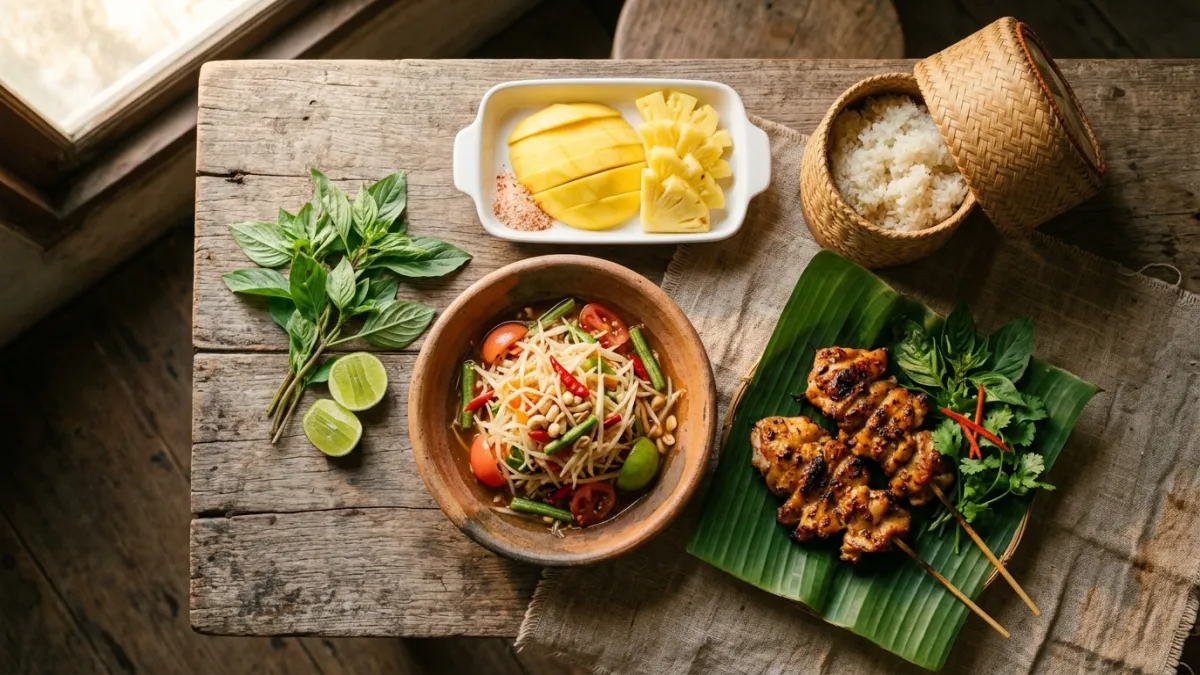
The coconut-free list is substantial. Thailand has a full cuisine tradition built on broth, grilling, and fermentation that predates widespread coconut milk use. Stick to these and you have real variety, not just one or two dishes.
| Dish | Thai Script | Notes |
|---|---|---|
| Tom yum | ต้มยำ | Clear broth, no coconut milk |
| Pad thai | ผัดไทย | Tamarind base, no coconut (verify peanut tolerance) |
| Pad kra pao | ผัดกระเพรา | Holy basil stir-fry, no coconut |
| Khao pad | ข้าวผัด | Fried rice, no coconut |
| Som tam | ส้มตำ | Papaya salad, no coconut |
| Larb | ลาบ | Minced meat salad, no coconut |
| Gai yang | ไก่ย่าง | Grilled chicken, no coconut |
| Moo ping | หมูปิ้ง | Grilled pork skewers, no coconut |
| Khua kling | คั่วกลิ้ง | Southern dry-fried curry, no coconut milk |
| Sai krok Isan | ไส้กรอกอีสาน | Isan fermented sausage, no coconut |
Khua kling (คั่วกลิ้ง) is worth singling out. It’s a Southern Thai dry-fried curry and the single major Thai curry made without coconut milk. Almost no allergy guides mention it. If you’re traveling in Phuket or the south and want a curry experience, khua kling is the one to seek out.
Which Region of Thailand Is Best for Coconut Allergies?
Regional variation is significant. The cuisine in each region reflects different historical influences, and coconut use tracks those differences closely. According to the Tourism Authority of Thailand, 35 million international visitors came to Thailand in 2024. Most allergy guides treat the country as one risk tier. For coconut allergy, it isn’t.
| Region | Coconut Density | Best Dishes |
|---|---|---|
| Isan (Northeast) | Lowest. Fermented fish and grilled meat tradition | Larb, gai yang, sai krok Isan, sticky rice, som tam |
| Northern (Lanna) | Low to moderate. Broth-based dishes common | Nam phrik num, sai ua sausage. Avoid khao soi |
| Central (Bangkok) | Heaviest. Green, red, panang curries everywhere | Pad thai, pad kra pao, som tam, grilled meats |
| Southern (Phuket, Krabi) | Heaviest overall plus heavy shrimp paste | Khua kling is the standout coconut-free dish |
Isan is the clear choice. Its food culture runs on sticky rice (ข้าวเหนียว, khao niao), grilled meats, fermented fish sauce, and herb salads. Coconut milk rarely appears. Cities like Udon Thani and Khon Kaen are Isan hubs worth centering a trip around for coconut-allergic travelers.
How Do You Tell a Thai Restaurant You Have a Coconut Allergy?
The Thai word for coconut milk is กะทิ (kati, pronounced gah-tee). That’s your core term. Kitchen staff generally recognize kati as an ingredient category.
| English | Thai Script | Romanization |
|---|---|---|
| I am allergic to coconut | ฉัน/ผมแพ้กะทิ | Chan/Phom pae kati |
| No coconut milk | ไม่ใส่กะทิ | Mai sai kati |
| No coconut cream | ไม่ใส่หัวกะทิ | Mai sai hua kati |
| Does this contain coconut? | มีกะทิไหม | Mee kati mai? |
| If I eat coconut I will die | ถ้ากินกะทิจะตาย | Tha gin kati ja tai |
The “ja tai” (จะตาย, will die) phrase signals medical urgency in a way that “allergic” (แพ้, pae) alone often doesn’t in a kitchen setting. Use it if your allergy is IgE-mediated and severe.
Show the Thai text to the cook directly. A physical card or your phone screen is more reliable than spoken Thai in a noisy kitchen. A 2025 Tropical Diseases, Travel Medicine and Vaccines study found 6.9 to 10% of travelers with food allergies experience a reaction abroad. Written preparation reduces that risk substantially.
What About Coconut Oil, Cream, and Flakes?
Coconut takes different forms in Thai cooking, and the allergy risk is not identical across all of them. Understanding the breakdown helps you ask the right questions.
Coconut milk (กะทิ, kati): The most common form. Used in curries, soups, and desserts. Highest allergy risk.
Coconut cream (หัวกะทิ, hua kati): Thicker, richer version of coconut milk. Used in panang curry and dessert toppings. Same protein profile, same risk.
Coconut oil (น้ำมันมะพร้าว, nam man maphrao): ASCIA notes refined coconut oil is generally tolerated by people with IgE-mediated coconut allergy, because refining removes most of the triggering proteins. Unrefined (virgin) coconut oil retains more protein and is higher risk. Verify which type a kitchen uses before deciding.
Coconut flesh (เนื้อมะพร้าว, nuea maphrao): Raw coconut meat. High protein content. Avoid.
Grated coconut (มะพร้าวขูด, maphrao khut): Appears as a garnish in miang kham (เมี่ยงคำ) and on some desserts. Not always listed on menus. Ask.
Coconut water is low in protein and generally lower-risk than coconut milk, but individual sensitivity varies. Discuss it with your allergist before assuming it is safe.
How Do You Read Thai Allergen Labels for Coconut?
Thailand’s food labeling situation creates a real gap for coconut-allergic travelers. Thai FDA Notification No. 450 B.E. 2567, effective July 2024, mandates allergen labeling on packaged foods. The nine mandatory allergens are: gluten-containing cereals, crustaceans, eggs, fish, peanuts, soybeans, milk, tree nuts, and sulfites.
Coconut is not on that list. It is not a mandatory labeled allergen under Thai law.
According to a 2024 Bangkok Post report, Thailand’s five most common food allergens are cow’s milk, eggs, wheat flour, soy milk, and shellfish. Coconut doesn’t appear in Thai clinical allergy data at high enough prevalence to trigger mandatory labeling.
The practical result: packaged products at 7-Eleven, Tops, or Lotus will not carry a “contains coconut” warning even when coconut milk is an ingredient. Read the full Thai ingredient list yourself. Look for กะทิ (kati) or มะพร้าว (maphrao) in the declaration. EU-packaged products list coconut if present. US-packaged products will not under FALCPA since the January 2025 FDA reclassification. Menu Decoder can help scan Thai ingredient text as a first-pass filter before you confirm the label directly.
Frequently Asked Questions
Is Coconut Still Classified as a Tree Nut for Allergy Labeling?
As of January 2025, no. The FDA’s Edition 5 Allergen Guidance removed coconut from the tree-nut allergen category. Under FALCPA, coconut had been listed as a tree nut since 2006. That is now revoked.
US packaged foods no longer need to label coconut as a tree nut. For travelers with a tree-nut allergy but no specific coconut sensitization, this may mean coconut is not a personal concern. For travelers with documented IgE-mediated coconut allergy, the reclassification changes labeling but not your medical situation. Coconut still contains the proteins that trigger your reaction. This is a regulatory change, not a medical clearance. Confirm with your allergist whether your panel included coconut-specific IgE testing, and request an updated test if your diagnosis is older.
Is Coconut Milk the Same as Coconut Water in Thai Cooking?
No. Coconut water is the clear liquid from inside a young green coconut. It’s low in fat and protein, and generally associated with lower allergenic risk. In Thai cooking it appears mainly as a beverage, not a cooking base.
Coconut milk (กะทิ, kati) is made by pressing grated coconut flesh with water. It’s high in fat and contains the seed storage proteins responsible for most IgE-mediated coconut reactions. Coconut cream (หัวกะทิ, hua kati) is the thicker top layer, even richer in protein. When travelers ask about “coconut milk” in Thai food, the allergy-relevant substance is always กะทิ or หัวกะทิ. Coconut water sold in plastic cups at street stalls is not used in cooking. If you’ve reacted to coconut water previously, avoid it. If you haven’t, many allergists consider it lower risk, but confirm that with your own doctor before treating it as safe.
Can I Eat Coconut Oil If I Have a Coconut Allergy?
Probably yes if refined, but confirm with your allergist. According to ASCIA, refined coconut oil is generally tolerated by people with IgE-mediated coconut allergy because refining removes most triggering proteins. Virgin or cold-pressed oil retains more protein and carries higher risk.
In Thai cooking, coconut oil (น้ำมันมะพร้าว, nam man maphrao) is a cooking fat in some regional dishes, not a primary base the way coconut milk is. You’re unlikely to know whether a kitchen uses refined or virgin oil without asking directly. The phrase น้ำมันมะพร้าว helps kitchen staff identify if it’s present. Whether you tolerate it depends on your specific test results. Raise this with your allergist before the trip.
Are Any Thai Curries Made Without Coconut Milk?
Yes, but only one major style. Khua kling (คั่วกลิ้ง) is a Southern Thai dry-fried curry with no coconut milk. The curry paste is stir-fried directly with minced meat over high heat without any liquid base. The result is intensely spiced, dry in texture, and very different from a typical curry. It’s common in Phuket, Krabi, and Hat Yai, though not at every tourist-facing stall since it’s a regional specialty.
All other major Thai curries, including green, red, yellow, panang, and massaman, use coconut milk as a non-negotiable base. For Northern Thai cuisine, gaeng om (แกงอ่อม, gaeng om) is sometimes made without coconut milk but the recipe varies by cook. Confirm before ordering. Tom yum (ต้มยำ) is technically a spiced broth soup, not a curry, and it uses no coconut milk at all. It’s a reliable coconut-free option throughout the country.
What Is the Safest Thai Dessert With a Coconut Allergy?
Fresh fruit is your most reliable option. Thailand’s year-round fruit is exceptional: mango, pineapple, papaya, rambutan, longan, and dragon fruit are all coconut-free and available from street vendors everywhere. A fresh-cut fruit platter is a legitimate dessert, not a fallback.
Beyond fruit, options thin quickly. Traditional Thai sweets (ขนม, ka-nom) are built almost universally on coconut milk or coconut cream. Mango sticky rice (ข้าวเหนียวมะม่วง) contains coconut milk steeped into the rice. Sangkaya (สังขยา) is a coconut milk custard. Khanom buang (ขนมเบื้อง) has coconut cream topping. Coconut ice cream (ไอศกรีมกะทิ) is explicitly coconut milk-based. Sticky rice ordered plain without coconut preparation (ข้าวเหนียวเปล่า, khao niao plao) at an Isan restaurant is coconut-free. For the full Thailand allergen picture, see the complete Thailand food allergy guide.
For related guides, see the shellfish allergy Thailand guide, the peanut allergy Thailand guide, and the soy-free Thailand guide.