
You’re celiac and you’re looking at Italy on a map. Pasta country. Bread with every meal. Pizza on every corner. It sounds like the worst possible destination. Except it’s the opposite. Italy has built something no other country has: a complete national system that makes eating gluten-free routine, not risky.
Italy is the best country for celiac travelers because it combines four things no other nation offers together: EU-mandated allergen disclosure in every restaurant, 4,000+ AIC-certified gluten-free venues with annual inspections, a government stipend paying celiacs up to 140 EUR/month for GF groceries, and pharmacy aisles stocked with gluten-free products that rival specialty health stores.
TL;DR: Italy has 4,000+ certified GF restaurants, mandatory allergen disclosure under EU law, government stipends for diagnosed celiacs, and dedicated pharmacy GF sections. But traps exist: mantecatura hides butter in risotto, gnocchi alla Romana is 100% semolina (not potato), and shared pasta water is a cross-contamination vector. Know the system, know the traps.
What Makes Italy’s Celiac Infrastructure Unlike Any Other Country?
Italy’s celiac support isn’t a collection of restaurants that happen to serve gluten-free options. It’s a coordinated system with four pillars: legislation, certification, financial support, and retail infrastructure. No other country has all four. Approximately 252,000 Italians were diagnosed celiac as of 2022, with the estimated true number exceeding 600,000 (roughly 1% of the population), according to the Italian Ministry of Health’s annual report to Parliament on celiac disease. That prevalence created political pressure. Celiac disease prevalence among Italian school-age children is among the highest in the world, according to a SIGENP multicenter study.
“Travelers with food allergies should carry translated allergy cards and verify ingredients directly with kitchen staff, not front-of-house servers.” — FARE (Food Allergy Research & Education)
The result is a country where “Sono celiaco” (I am celiac) triggers a specific, trained response in most restaurants, not a blank stare. For a broader comparison of how countries stack up, see our ranking of the easiest and hardest countries for celiac travelers.
What Is the AIC Certification and How Does It Work?
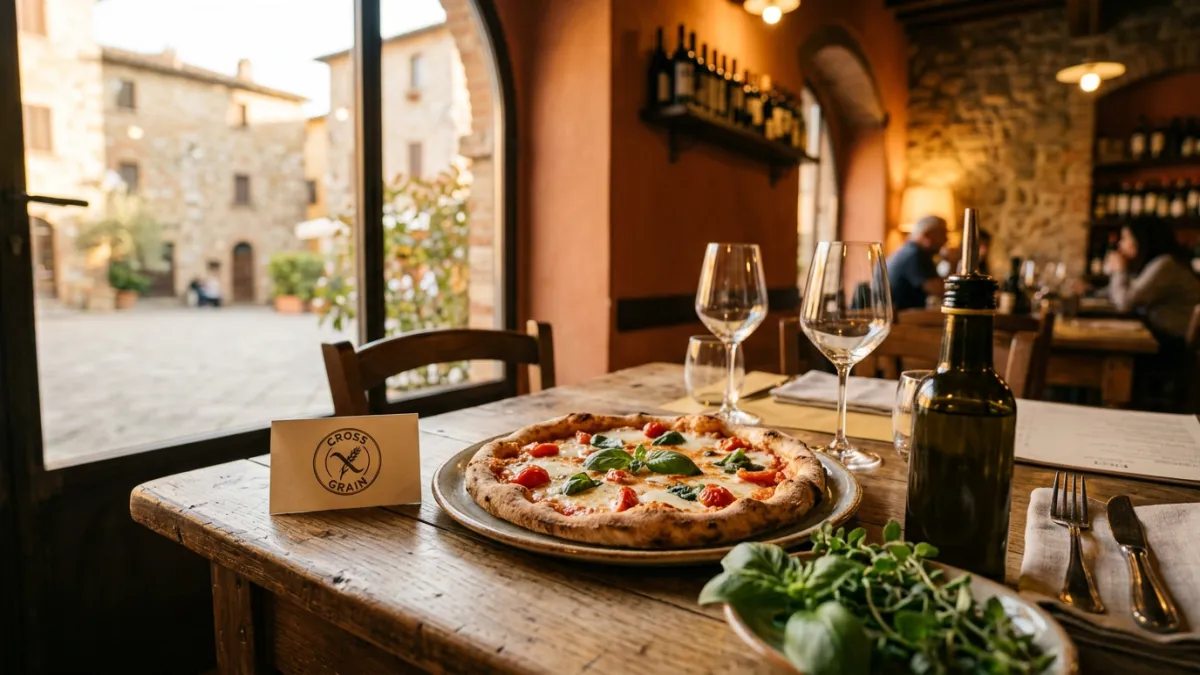
The Associazione Italiana Celiachia (AIC) runs the Alimentazione Fuori Casa (AFC) program, which certifies over 4,000 restaurants, pizzerias, gelaterias, and hotels across Italy. Certification isn’t a sticker you buy. Each venue undergoes annual on-site inspections covering dedicated prep areas, staff training on cross-contamination, and use of exclusively GF-certified ingredients. The AIC’s Spiga Barrata (crossed grain) symbol certifies that products contain less than 20 ppm gluten, with approximately 16,000 certified products from around 450 companies. You can download the AIC app (about 5 EUR for two-week access) to search a live map of certified venues by location. This is the single most useful tool for a celiac traveler in Italy. Nothing comparable exists in France, Japan, or the US.
What Is the Bonus Celiachia and Who Qualifies?
Diagnosed celiacs in Italy receive the Bonus Celiachia, a monthly government voucher of up to 140 EUR for gluten-free grocery purchases, according to AIC Toscana. The voucher amount varies by age and gender (adult men receive more than children, for example) and is loaded onto the tessera sanitaria (health card). Italian residents with a confirmed celiac diagnosis qualify automatically. Tourists don’t qualify for the stipend, but the system’s existence tells you something critical about Italian culture: celiac disease is treated as a legitimate medical condition requiring state support, not a lifestyle preference. That cultural seriousness filters down to how restaurant staff respond when you tell them you’re celiac. Italian pharmacies also stock extensive gluten-free sections with bread, pasta, flour, and snacks, often rivaling dedicated health food stores in the US.
What Are the Hidden Gluten Traps That Catch Celiacs in Italy?
Italy’s infrastructure is excellent, but it doesn’t make the country foolproof. According to a PMC study on peanut and tree nut reactions, in 50% of restaurant incidents the allergen was hidden in a sauce, dressing, or egg roll. In Italy, the traps are specific and predictable. Cross-contamination vectors include shared pasta water (the same pot of boiling water used for wheat pasta), shared fryer oil where breaded items and non-breaded items cook together, Parmigiano offered at the table (contains no gluten but signals dairy cross-contact risk), and gelato scoops shared between flavors. There’s also soffritto, the foundation of virtually every Italian sauce, soup, and braise: onion, carrot, and celery sauteed in olive oil. Celery is one of the 14 declared EU allergens, but it’s never mentioned on menus because Italians consider soffritto as fundamental as salt. EU Regulation 1169/2011 mandates disclosure of 14 specific allergens in all food sold in restaurants, but disclosure only works if you know what to ask about.
Why Is Risotto Dangerous for Dairy-Free Celiacs?
Risotto is naturally gluten-free (it’s rice), which makes celiacs assume it’s safe. The trap is mantecatura: the finishing technique where cold butter and Parmigiano-Reggiano are vigorously stirred into the risotto off-heat to create that signature creamy texture. It’s never listed on the menu because it’s considered a fundamental technique, not an ingredient. Even “mushroom risotto” or “vegetable risotto” contains significant dairy from mantecatura. The one traditional exception is seafood risotto (risotto ai frutti di mare), which usually omits cheese. If you’re celiac but not dairy-free, risotto is one of your best options. If you’re managing both celiac and dairy allergies, ask specifically: “Senza burro e senza parmigiano, per favore” (without butter and without Parmigiano, please).
Which Italian Dishes Look Gluten-Free but Aren’t?
The most dangerous impostor is gnocchi alla Romana. Unlike potato gnocchi (which are usually gluten-free or contain minimal flour), Roman-style gnocchi are made entirely from semolina, which is wheat. They’re baked discs of semolina, milk, butter, and egg. The name “gnocchi” tricks celiacs into assuming potatoes. Other traps: ribollita and pappa al pomodoro are Tuscan “soups” where stale bread is a structural ingredient, not a garnish. Anything labeled “impanato” (breaded) or “fritto” (fried) uses wheat flour. And polpette (meatballs) contain bread soaked in milk as a binder. A tool like Menu Decoder can flag these impostor dishes when you photograph an Italian menu, though you should always confirm directly with the kitchen.
| Dish | What It Looks Like | What It Actually Contains |
|---|---|---|
| Gnocchi alla Romana | Potato gnocchi | 100% semolina (wheat) + milk + butter + egg |
| Ribollita | Vegetable soup | Stale bread as structural ingredient |
| Pappa al pomodoro | Tomato soup | Stale bread pureed into base |
| Polpette | Meatballs (just meat) | Bread soaked in milk + egg + Parmigiano |
| Supplì / Arancini | Rice balls | Flour + egg + breadcrumb exterior |
Which Italian Dishes Are Naturally Safe for Celiacs?
Italy’s strength for celiacs isn’t just the certified restaurant network. Many traditional dishes are inherently gluten-free. Risotto (rice-based, naturally GF), polenta (cornmeal), grilled meats like bistecca alla fiorentina, grilled fish like branzino alla griglia, and most contorni (vegetable sides) are safe starting points. Insalata caprese, prosciutto e melone, and carpaccio di manzo are reliable antipasti. For dessert, panna cotta (cream, sugar, gelatin) and sorbetto (fruit, sugar, water) skip flour entirely. Torta Caprese, the Neapolitan chocolate cake, is naturally gluten-free because it uses almond flour instead of wheat, though it contains tree nuts and eggs. Farinata (chickpea flatbread from Liguria) is one of the safest street foods in Italy for celiacs: chickpea flour, water, olive oil, salt. One lesser-known caution: some Italian GF products use lupin flour as a wheat substitute, and lupin has a 4-44% clinical cross-reactivity rate with peanut allergy depending on the study and testing method, according to PubMed data. If you’re managing a peanut allergy alongside celiac, check GF product labels for lupini. For a detailed guide on eating safely with food allergies in Italy, see our full country breakdown.
How Do You Tell an Italian Restaurant About Celiac Disease?
The phrase “Sono celiaco” (SOH-noh cheh-LEE-ah-koh) for men, or “Sono celiaca” (cheh-LEE-ah-kah) for women, is the most important sentence you’ll use in Italy. Unlike in Japan or Thailand where the concept of celiac disease isn’t widely recognized, Italian staff usually know exactly what it means. According to a questionnaire study published in Annals of Allergy, Asthma & Immunology, 68% of food allergy patients limit their vacation destinations due to allergy concerns. In Italy, that anxiety is largely unnecessary if you use the right language. Follow up with “Posso vedere la lista degli allergeni?” (Can I see the allergen list?), which invokes the EU legal requirement for written allergen disclosure. Show, don’t just tell: ask for the written allergen menu (quaderno allergeni) that every Italian restaurant is legally required to maintain. If you want to pre-screen dishes before that conversation, Menu Decoder lets you photograph the Italian menu and flag gluten-containing items based on your profile, though it’s not a substitute for speaking with the kitchen directly.
| Italian Phrase | Pronunciation | Meaning |
|---|---|---|
| Sono celiaco/celiaca | SOH-noh cheh-LEE-ah-koh/kah | I am celiac (male/female) |
| Posso vedere la lista degli allergeni? | POHS-soh veh-DEH-reh lah LEE-stah deh-lyee ahl-LEHR-jeh-nee | Can I see the allergen list? |
| Senza glutine | SEN-tsah GLOO-tee-neh | Without gluten |
| Questo piatto contiene glutine? | KWES-toh pee-AHT-toh kohn-tee-EH-neh GLOO-tee-neh | Does this dish contain gluten? |
Does the North-South Divide in Italy Matter for Celiacs?
Yes, and it matters more than most guides acknowledge. Italy’s most important allergen dividing line is the cooking fat: the north uses butter, the south uses olive oil. If you’re managing celiac disease plus a dairy allergy, southern Italy is structurally safer. Sauces in Campania, Puglia, Calabria, and Sicily are typically built on olive oil, garlic, and tomatoes. Northern cuisine in Lombardia, Piemonte, and Emilia-Romagna leans heavily on butter, cream, and cheese-based preparations. Italy welcomed 71.2 million tourists in 2024, according to Tourist Italy, and most cluster in Rome, Florence, and Venice. Rome sits right on the dividing line. Florence is butter territory. Venice is butter territory. Sicily is olive oil territory, but watch for sesame: Pane Siciliano and Mafalda bread are coated in sesame seeds (Arab culinary influence), and bread arrives at the table automatically. If you have a sesame allergy on top of celiac, Sicily requires extra vigilance. Celiac disease affects approximately 1.4% of the global population based on serological testing, per a 2018 meta-analysis in Clinical Gastroenterology and Hepatology, but Italy’s regional cooking traditions mean your risk profile shifts depending on where you travel.
Frequently Asked Questions
Can celiacs eat pizza in Italy?
Yes, and Italy is one of the best places in the world to find legitimate gluten-free pizza. Many AIC-certified pizzerias offer GF pizza made with certified flour blends and prepared in dedicated areas to prevent cross-contamination. The AIC’s AFC program includes pizzerias specifically because pizza is so central to Italian food culture. Look for the Spiga Barrata symbol or search the AIC app for certified pizzerias near you. Some uncertified restaurants also offer GF pizza, but without the AIC certification you can’t be sure about cross-contamination protocols. Shared ovens, shared prep surfaces, and airborne flour are real risks in a standard pizzeria. The certified venues use separate prep areas and often separate ovens. Quality varies, but the best GF pizzerias in Naples and Rome produce pizza that’s genuinely good, not just “good for gluten-free.”
What does the Spiga Barrata symbol mean?
The Spiga Barrata (crossed grain of wheat) is the AIC’s certification mark. On packaged products, it means the item has been tested and confirmed to contain less than 20 parts per million (ppm) of gluten, which is the international safety threshold for celiac disease. Approximately 16,000 products from around 450 companies carry the Spiga Barrata certification, according to AIC data. On restaurants, the related AFC (Alimentazione Fuori Casa) certification means the venue has passed annual inspections for cross-contamination protocols, staff training, and ingredient sourcing. The Spiga Barrata is the most recognized GF symbol in Italy and arguably the most rigorous national GF certification program in the world. You’ll see it on packaging in supermarkets, pharmacies, and on restaurant windows and menus.
Is Italian pasta safe for celiacs?
Standard Italian pasta contains wheat (semolina) and is not safe for celiacs. Fresh pasta (tagliatelle, fettuccine, pappardelle, lasagne, tortellini, ravioli) also contains eggs in addition to wheat. However, Italy has the widest selection of certified gluten-free pasta in the world. Major Italian brands produce GF versions made from rice, corn, or legume flours, and they’re available in virtually every supermarket. In AIC-certified restaurants, GF pasta is cooked in separate water (not the same pot used for wheat pasta) and prepared with dedicated utensils. The key phrase is “Avete pasta senza glutine?” (Do you have gluten-free pasta?). In non-certified restaurants, always ask whether the GF pasta is cooked in its own water, as shared pasta water is the most common cross-contamination vector.
What Italian phrases should celiacs learn?
Beyond “Sono celiaco/celiaca,” learn these phrases in order of importance. “Posso vedere la lista degli allergeni?” (Can I see the allergen list?) invokes EU law and usually produces a written document. “La pasta senza glutine viene cotta in acqua separata?” (Is the GF pasta cooked in separate water?) addresses the biggest cross-contamination risk. “Questo piatto contiene farina di frumento?” (Does this dish contain wheat flour?) is useful for dishes where gluten hides, like gnocchi alla Romana. “Senza burro e senza formaggio” (without butter and without cheese) covers dairy if you’re managing both. Write these phrases on a card and hand it directly to the kitchen, not just the server. Italian kitchen staff generally respond well to specific, informed questions because celiac disease is culturally understood.
Which Italian dishes are naturally gluten-free?
Many classic Italian dishes contain no gluten by default. Risotto (all varieties) is rice-based. Polenta is cornmeal. Grilled proteins like bistecca alla fiorentina, branzino alla griglia, and tagliata di manzo are inherently safe. Antipasti like insalata caprese, prosciutto e melone, carpaccio di manzo, and insalata di mare skip flour entirely. Vegetable sides (contorni) including carciofi alla romana, peperonata, and patate al rosmarino are typically GF. For dessert, panna cotta, sorbetto, and granita are safe. Farinata (Ligurian chickpea flatbread) is naturally GF since it’s made from chickpea flour, water, and olive oil. The risk with naturally GF dishes is usually cross-contamination or finishing techniques (like mantecatura adding butter/cheese to risotto), not the base ingredients themselves.
Is gelato safe for celiacs in Italy?
Gelato flavors are usually gluten-free in their base recipes. Fruit sorbets (sorbetto) are the safest option: fruit, sugar, water. Custard-based flavors (crema, stracciatella, cioccolato) are typically GF as well. The risk comes from two sources. First, some flavors contain cookie or cake pieces: biscotto, tiramisù, cookies and cream, and stracciatella (sometimes made with cookie crumble rather than chocolate shavings). Second, shared scoops are a cross-contamination vector. A scoop that just served a cookie-based flavor now touches your pistachio. AIC-certified gelaterias manage this with dedicated scoops and careful protocols. At non-certified shops, ask “Quali gusti sono senza glutine?” (Which flavors are gluten-free?) and request a clean scoop. Some gelaterias display the Spiga Barrata symbol on specific flavors they can guarantee.
This guide is for informational purposes only and is not medical advice. Allergen information, restaurant protocols, and regulations can change. Always verify directly with restaurant staff and consult your doctor for guidance specific to your condition.